2026 Market Snapshot
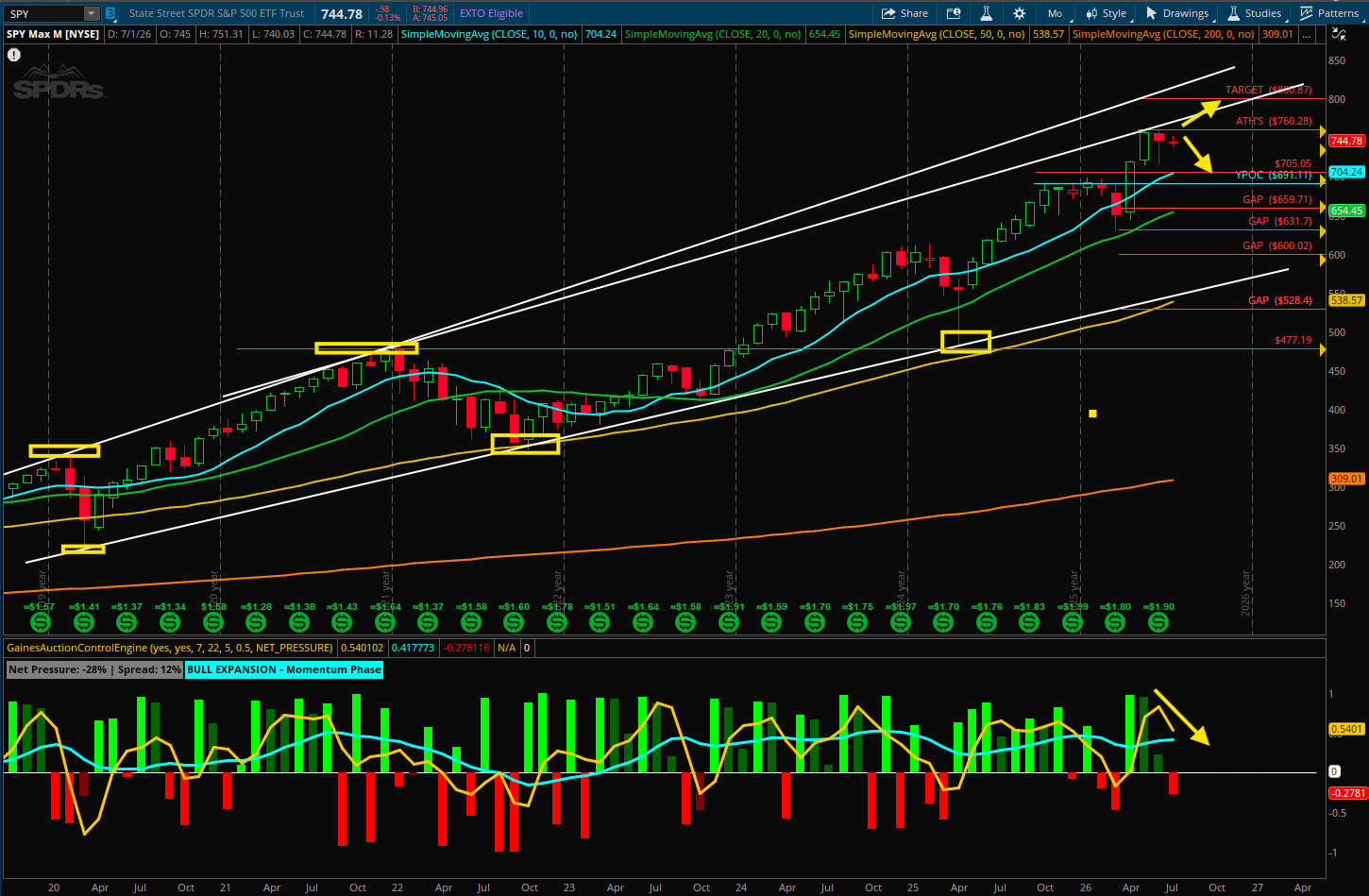
SPY is currently maintaining a bullish structure, supported by multiple confirming factors. Its move back above the 9-month EMA suggests that the broader uptrend remains intact and that institutional buyers have stepped in to defend key levels after recent geopolitical uncertainty. At the same time, the VPD indicator reflects a decline in selling aggression, indicating that downside pressure is easing and that recent selling is likely more passive than forced. This is reinforced by On-Balance Volume holding above its 20-month signal line, which signals that accumulation remains intact and that large participants are not exiting positions in size. Altogether, these elements point to continued buyer control and a stabilization of market conditions, with a bias toward further upside. However, this outlook remains sensitive to developments in U.S.–Iran negotiations, as any deterioration could quickly reintroduce volatility, increase selling pressure, and disrupt the current bullish trend.
Economic State
The Paradox of Late 2025: 4 Surprising Truths About the U.S. Economy
The U.S. economy is currently a house divided. Depending on which data set you pull, you are either looking at a resilient powerhouse or an engine beginning to stall. We find ourselves in a bizarre landscape where the S&P 500 continues to flirt with record highs while fundamental growth indicators are being slashed. Why does the data feel so contradictory right now? To navigate the final months of 2025, we have to look past the surface-level optimism and examine the four paradoxes that are currently baffling the markets.
1. The Growth Gap: Wall Street’s Bull vs. Main Street’s Chill
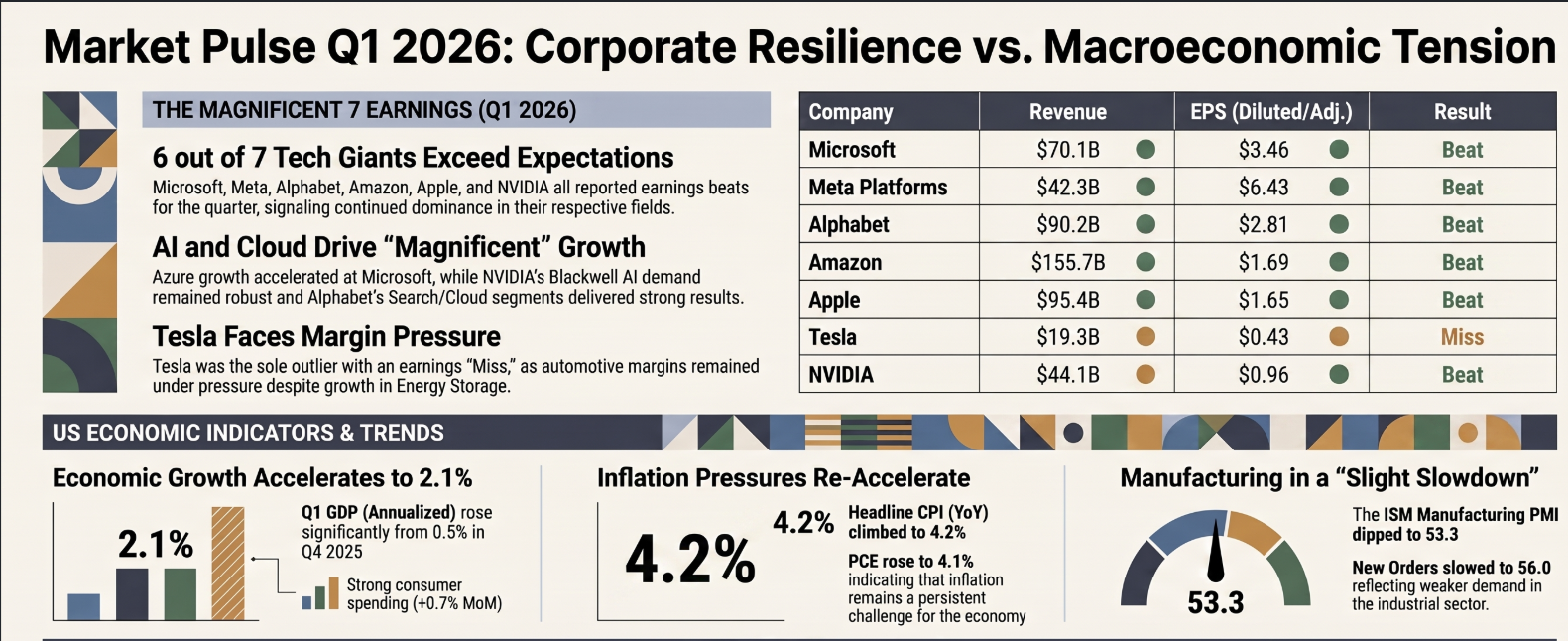
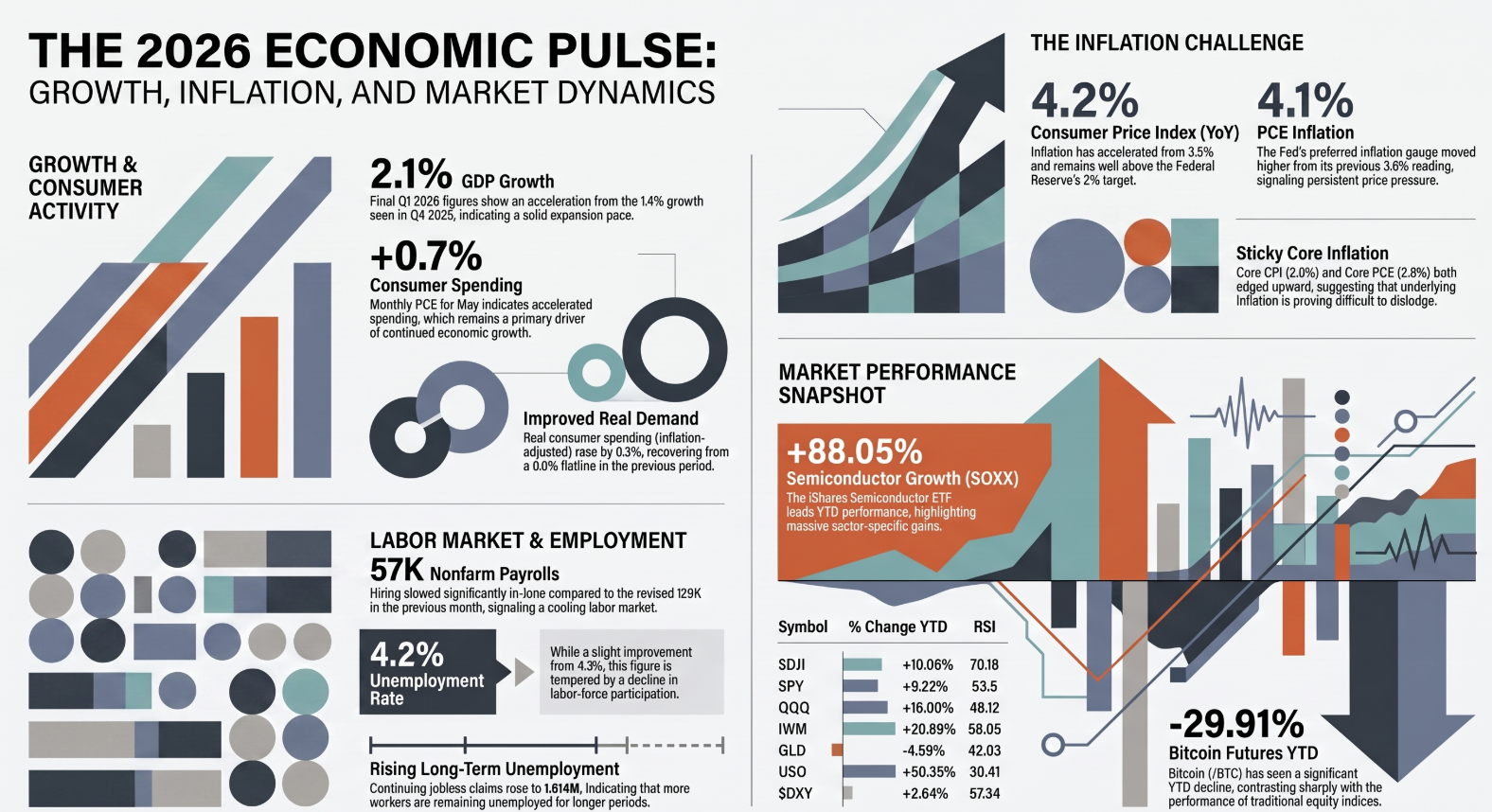
There is a widening chasm between equity market performance and the actual pace of American economic expansion. While the stock market remains locked in an extended bull cycle, the reality for the broader economy is much more sobering. Real GDP for Q4 2025 has been revised downward into a narrow 0.5%–1.4% range.
Despite this sluggish growth, financial markets aren't screaming in pain. Credit spreads remain notably tight—a classic signal that recessionary stress hasn't hit the credit markets—and the VIX remains at moderate levels. Essentially, the market is currently ignoring the macro slowdown, betting that a cooling economy won't necessarily translate into a corporate earnings collapse.
Big Picture Summary: Growth is slowing but still positive, holding steady in the ~1–1.5% range.
2. The Core PCE Trap: Why the Fed Can’t Pivot Yet
If you only look at the headline numbers, you might think the inflation fight is over. CPI has cooled to approximately 2.4%, creeping ever closer to that "magic" 2% target. However, the Federal Reserve doesn't set policy based on headlines; they focus on Core PCE, and that metric tells a much more stubborn story.
Core PCE currently sits between 3.0%–3.1%. This 0.6%–0.7% spread between headline inflation and the Fed’s preferred "core" measure is unusually wide and creates a strategic stalemate. With the Fed Funds Rate at 3.75%, the environment remains "restrictive" because the Fed cannot justify a major pivot while core prices remain a full point above their target. For investors expecting a rapid descent in rates, this "sticky" core inflation is the trap that could keep borrowing costs elevated much longer than anticipated.
3. The Payroll Mirage: Resilient Spending on Shaky Ground
One of the most counter-intuitive storylines of late 2025 is the sheer defiance of the American consumer. We just saw a remarkably strong Retail Sales print of +0.6% MoM, with personal spending maintaining a steady +0.3%–0.4% trend. People are still buying, but the foundation beneath them is softening.
The labor market is no longer the juggernaut it was a year ago. Nonfarm Payrolls have become increasingly volatile, with recent prints swinging between +50K and +130K. Meanwhile, the Unemployment Rate has ticked up to the 4.3%–4.4% range. We are witnessing a "payroll mirage" where consumer activity remains high even as job momentum fades. The big question for the next quarter is how long spending can outpace the cooling reality of the labor market.
4. The Manufacturing Anchor in a Sea of Service Volatility
While the massive services sector usually drives the American narrative, it is currently the source of significant anxiety. The ISM Services PMI has been on a rollercoaster, swinging wildly between 49.8 and 56—effectively teetering on the edge of contraction.
In a surprising twist, it is the industrial sector providing the "sturdy floor." The ISM Manufacturing PMI is holding steady between 51 and 52, placing it firmly in the expansion zone. While industrial production remains flat to slightly positive, this quiet expansion in manufacturing is providing critical stability. In a slowing GDP environment, the fact that the "old economy" is expanding while the services sector fluctuates wildly is perhaps the most underrated safeguard against a deeper downturn.
Conclusion: The Forward Look
The data paints a picture of a restrictive but steady regime. We are operating in an economy defined by cooling inflation, a stable but softening labor market, and a consumer that refuses to stop spending despite a narrowing path.
As we look toward 2026, we have to ask the uncomfortable question: How long can this "extended bull cycle" in the financial markets persist while GDP growth is revised down to sub-1.5% levels and core inflation remains stuck in the threes? The margin for error is getting thinner by the day.
Investment Disclaimer: The information provided is for educational and informational purposes only. It should not be considered financial, investment, or tax advice. Please consult with a licensed investment advisor before making any investment decisions.